A useful new AI business case surfaced on June 11, 2026, when Business Insider published details of how Lazer Logistics built an internal AI system called Uncle Phil AI. The premise is unusually practical. Instead of launching a generic chatbot, the company tried to turn the operating judgment of COO Phil Newsome into a decision layer that site managers could use across 750 locations.
That matters because most enterprises are still stuck in the gap between AI interest and AI operations. A recent Forrester report, cited by ITPro on the same day, said about 75% of enterprise leaders report adopting agentic AI, yet only a small minority have pushed it into meaningful operational use. Lazer is interesting precisely because it looks like the opposite of that pattern: less AI theater, more embedded workflow.
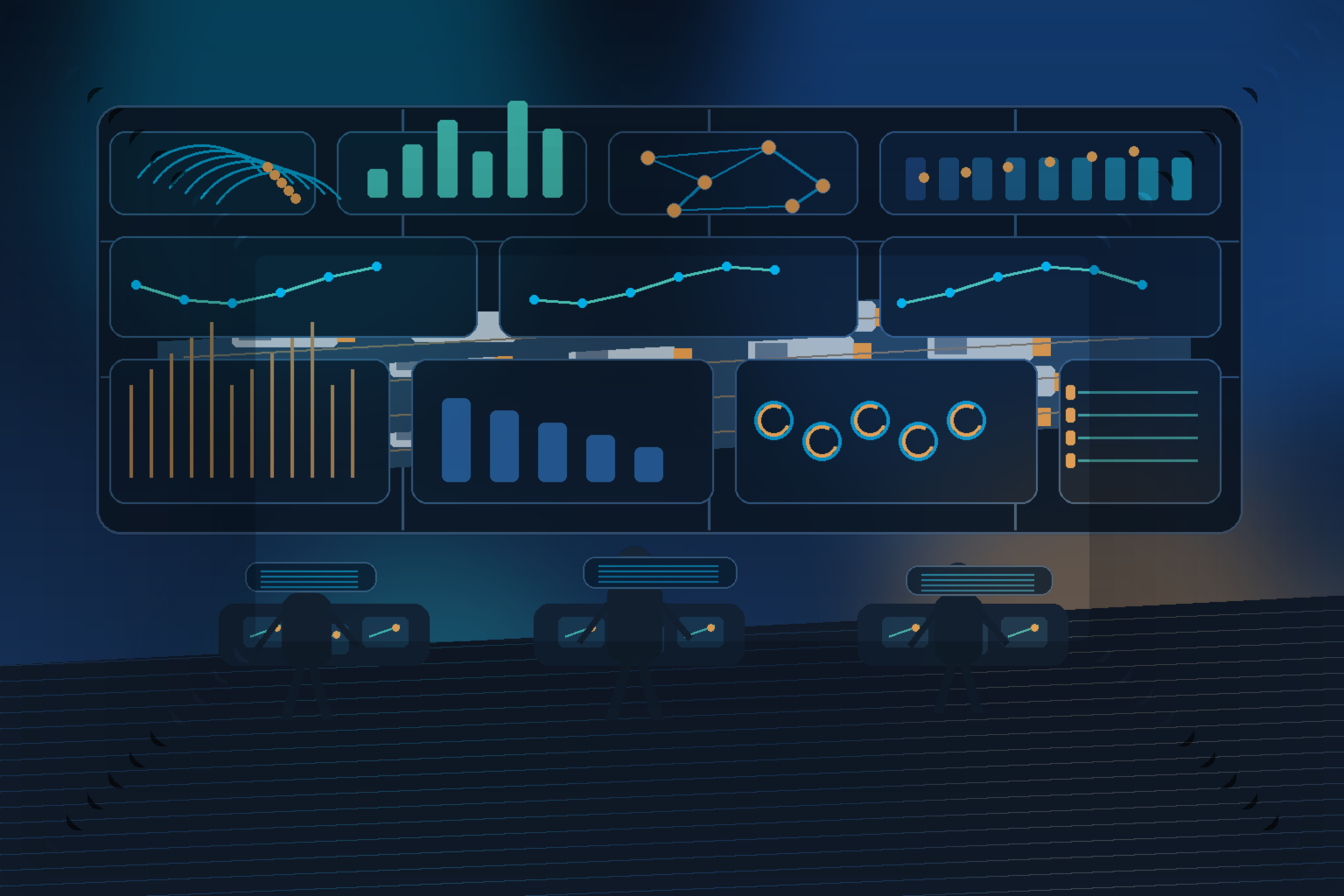
The case is also refreshingly specific about what the system does. Uncle Phil AI pulls together truck telematics, in-cab video signals, maintenance records, inspection reports, labor data, and yard-management workflows, then surfaces what is happening, why it may be happening, and what a strong operator would do next. That is a materially different proposition from asking a model to summarize documents. It is AI attached to a live operational bottleneck.
Real operations AI often looks less like automation of labor and more like distribution of judgment.
What Lazer Logistics Actually Built
Lazer Logistics operates in a part of supply chain management that usually gets less attention than warehouses or line-haul transportation: the yard. This is the space where trucks, trailers, docks, labor availability, equipment failures, and schedule disruptions collide in real time. It is messy, pattern-heavy, and expensive when decisions are late or wrong.
The company's answer was not to remove managers from the loop. It was to give less-experienced operators access to the pattern recognition of a veteran executive with 36 years of yard-operations experience. According to CIO Melanie Sandlin, the AI was modeled on the way Newsome reads a yard, spots what is wrong, and decides what to change. The system then applies that operating logic at a scale a human expert cannot reach alone.
That design choice is what makes the case business-relevant. Many enterprise AI projects start with information generation: write this, summarize that, answer these questions. Lazer started with operational judgment. Uncle Phil AI sits inside the company's operating system and helps managers decide where to prioritize moves, when staffing should flex, how to respond to equipment issues, and where a yard is falling out of rhythm.
The company also appears to have done the unglamorous work first. Sandlin said Lazer invested in a unified and governed data layer before pushing AI into the workflow. That meant connecting truck telematics, safety systems, maintenance data, labor and scheduling inputs, and yard workflow records. Without that step, the AI would have had little more than guesses. With it, the system can act as a real operations partner rather than a language interface floating above bad data.
Why This Looks Like a Real Business Case
There are four reasons this case deserves attention.
First, the company targeted a real bottleneck. Yard operations are one of those categories that can quietly absorb labor, delay freight, and create downstream customer issues without getting executive attention. As supply-chain advisor Bart De Muynck noted in the Business Insider report, many companies have clear KPIs for warehouses and transportation but not for the yard. Lazer picked a blind spot where better decisions can compound quickly.
Second, the AI is grounded in proprietary operational context. The model is not being asked to invent best practice from public internet data. It is being fed signals from Lazer's actual systems and shaped around internal judgment patterns. That is usually where AI adoption becomes commercially durable: when the differentiator is not the model alone, but the operating context wrapped around it.
Third, the rollout is tied to live management work rather than abstract experimentation. The article describes AI guidance for dozens of daily site-manager decisions, from labor allocation to move sequencing to response during disruptions. That is a much stronger adoption signal than a sidecar assistant used only for occasional drafting or search.
Fourth, the company reported early workflow returns without pretending the story is finished. Lazer said digitizing vehicle inspection reports and removing paper from the process gave site managers more time back for coaching, customer service, and running better yards. Those are not dramatic headline ROI numbers, but they are exactly the sort of operational indicators that often show whether an AI layer is genuinely starting to matter.
What Other Companies Should Copy
Most businesses do not run 750-yard logistics networks, but the operating lessons transfer well.
- Start with tacit expertise. If a few veteran operators consistently outperform everyone else, there is probably a valuable decision pattern worth codifying.
- Fix the data layer before the AI layer. Lazer's own description makes clear the governed operational data foundation came first.
- Put AI inside the decision loop. The best use cases are usually not generic Q&A. They are recommendations tied to the next action a manager should take.
- Target neglected workflows. AI can create disproportionate leverage in business areas that are operationally important but poorly instrumented.
- Measure time and friction removed. More manager time for coaching, exception handling, and customer-facing work is often a better early metric than broad productivity slogans.
This is relevant beyond logistics. Field service, manufacturing shift supervision, fleet operations, utilities, facilities management, and dispatch-heavy service businesses often face the same problem: the company's best operating judgment lives inside a few people instead of inside the system.
The Caveats
This case is still incomplete in an important way. Lazer did not publish a clean revenue, margin, or labor-efficiency bridge attached to Uncle Phil AI. The available evidence comes from executive descriptions in an interview, not from audited operating disclosures or a technical paper. That means the business value here is best read as credible early operating leverage, not as a finished ROI proof.
There is also a transferability limit. A company without connected operational systems, disciplined data governance, or enough repeated decision patterns will not get this result simply by "training an AI on the best manager." The system works because the patterns are observable, the data is unified, and the workflow is active every day.
Still, this is a better AI adoption story than most because it clears the practical bar. It solves a real business problem, uses proprietary data, distributes scarce expertise, and is already changing how managers run the operation.
The Business Takeaway
Lazer Logistics' latest case suggests that one of the most valuable uses of AI in operations is not content generation. It is judgment replication. When a company can encode how its best operators see a situation, interpret the signals, and choose the next move, AI stops being a novelty and starts becoming operating infrastructure.
If you are building your own AI business case, look for the workflow where outcomes still depend on a handful of experienced people noticing patterns faster than everyone else. That is often where the highest-value AI opportunity lives. The goal is not to replace those experts. It is to turn their decision quality into a system capability the rest of the business can actually use.
Sources & Further Reading
- Business Insider: A logistics company designed an AI tool inspired by its supply-chain veteran COO. Meet Uncle Phil. — June 11, 2026 reporting on Uncle Phil AI, its use across 750 sites, the 36-year operating model behind it, and the unified data foundation supporting the rollout
- ITPro: Most enterprises are still unprepared to operationalize agentic AI — June 11, 2026 coverage of Forrester research showing that many enterprises report adoption interest while only a small minority have reached real operational deployment